/04 · 2023
Xylopolis · Center for Art and Science of Wood
A cultural center celebrating Podlasie's wooden heritage: an interactive timber envelope shaped by solar and airflow analysis.
- role
- Computational design, analysis, technical drawings, renders
- location
- Białystok, Poland
- org
- WXCA
- tutors
- Michał Czerwiński
- tools
- Rhino · Grasshopper · Ladybug · 3ds Max · Corona · Revit · Illustrator

Overview
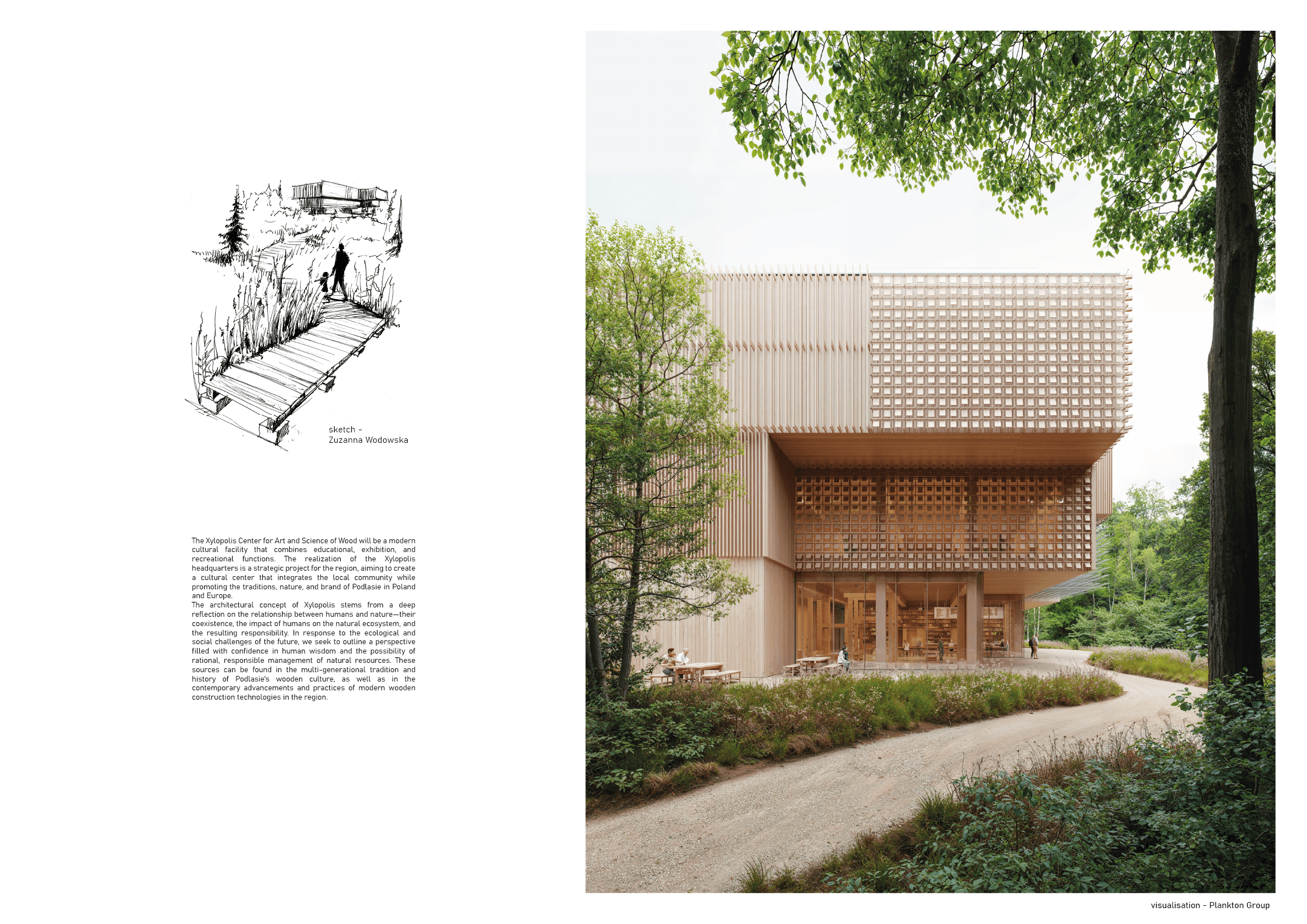
Xylopolis is a modern cultural facility combining educational, exhibition and recreational functions, a strategic project for the region that integrates the local community while promoting Podlasie's traditions, nature and brand across Poland and Europe. The architectural concept stems from a reflection on the coexistence of humans and nature, the impact of humans on the ecosystem, and the resulting responsibility.
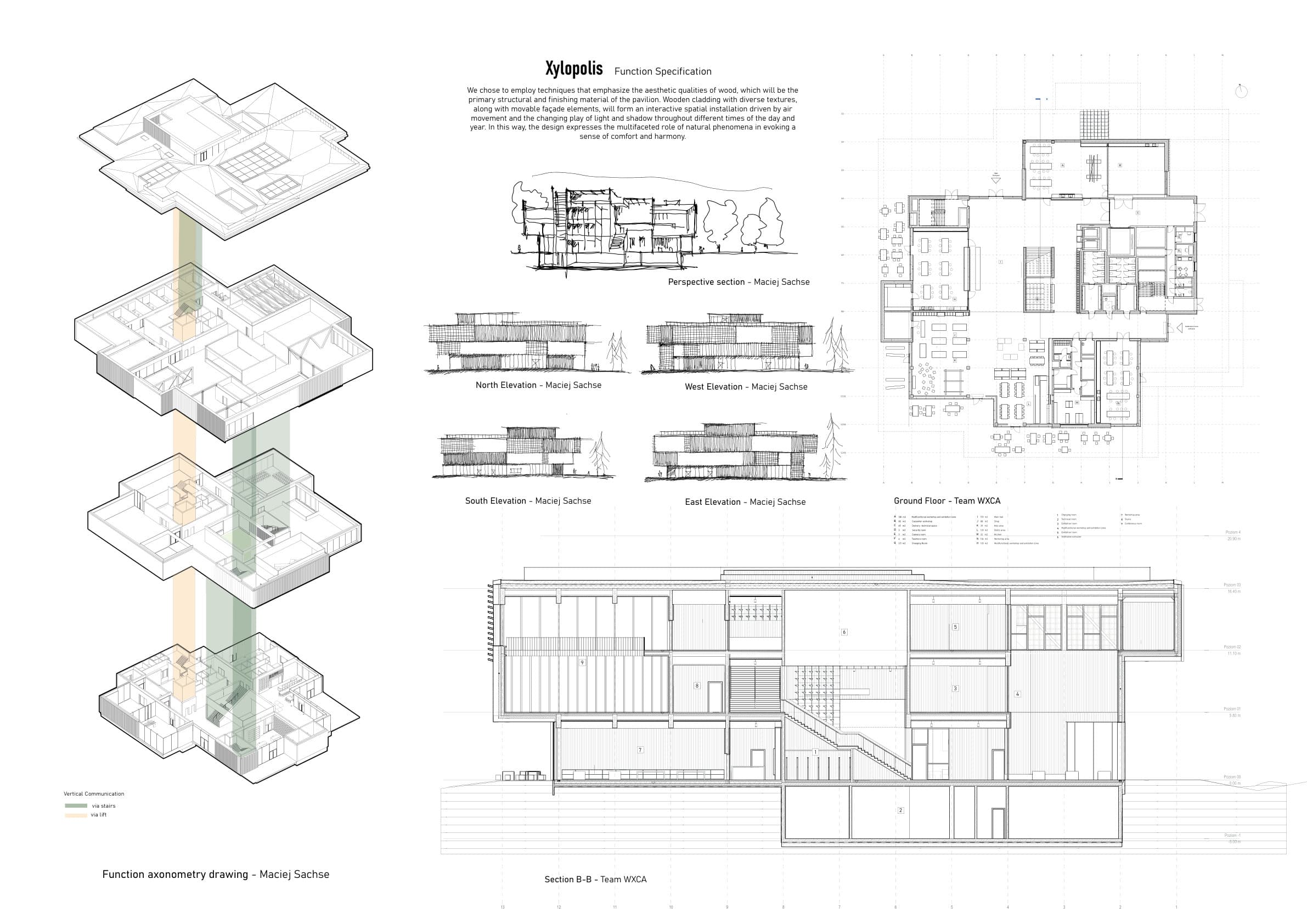
The design emphasizes the aesthetic qualities of wood, the primary structural and finishing material of the pavilion. Wooden cladding with diverse textures, together with movable façade elements, forms an interactive spatial installation driven by air movement and the changing play of light and shadow throughout different times of the day and year. The building expresses the multifaceted role of natural phenomena in evoking comfort and harmony.
My role on the WXCA sustainable development team covered computational design and environmental analysis, design development, technical drawings, and renders. The program spans a multifunctional workshop and exhibition zone, carpenter workshop, main hall, bistro, kids' area, shop and conference room across six levels (Poziom -1 at -5.00 m up to Poziom 4 at 20.90 m). A building about wood, made of wood, analysed for how wood behaves in the sun. The brief was at least consistent.
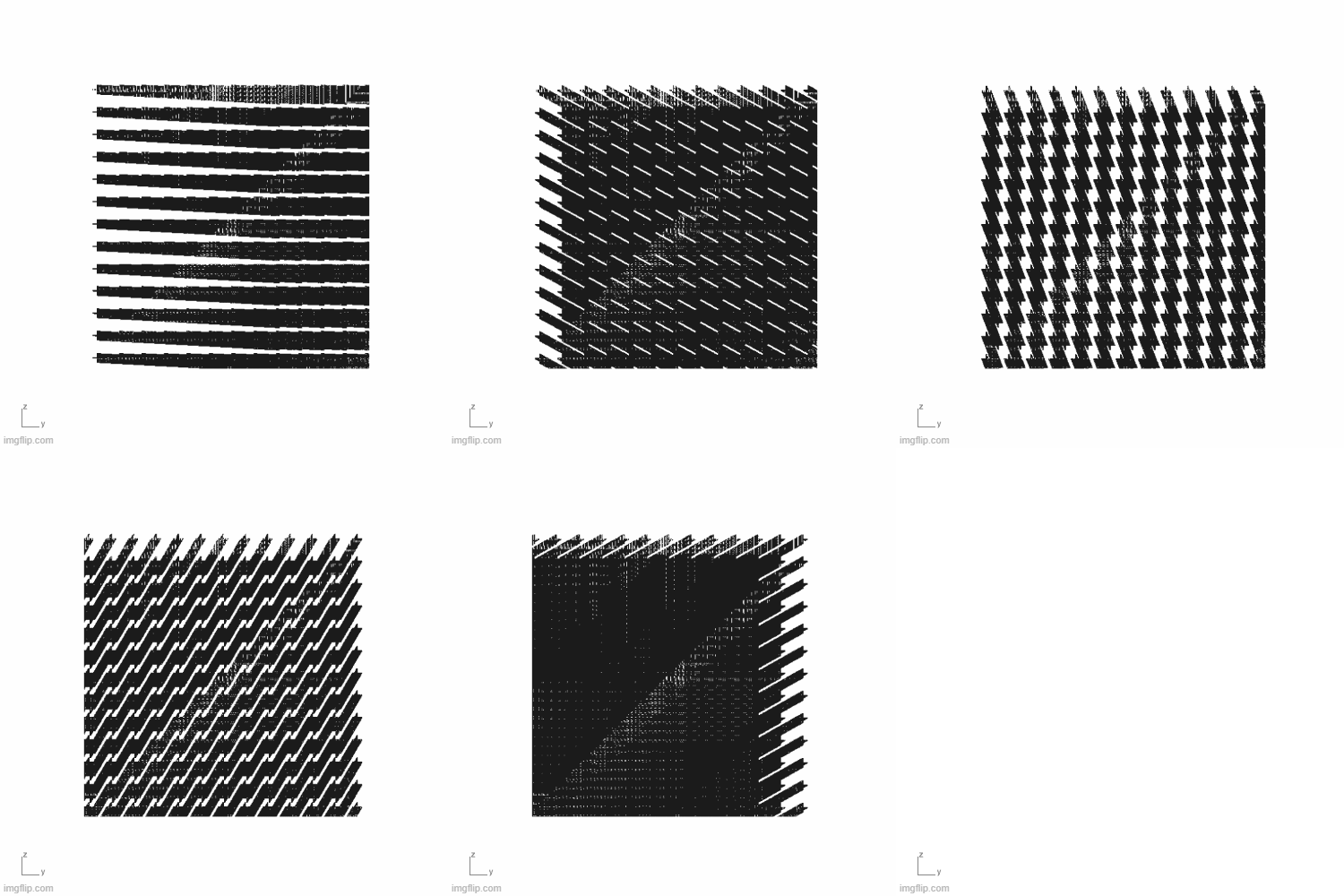
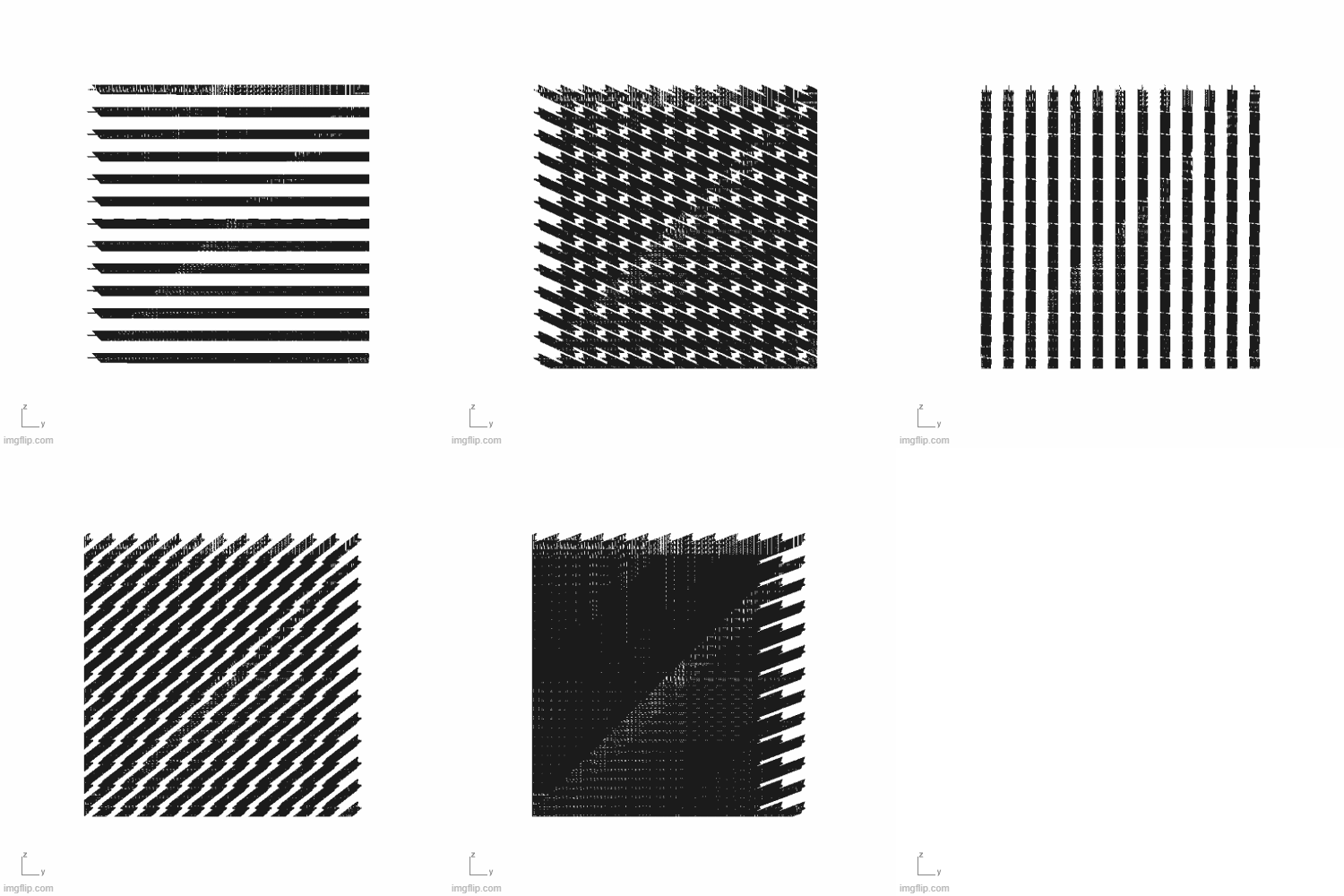
Solar shading · five panel variants
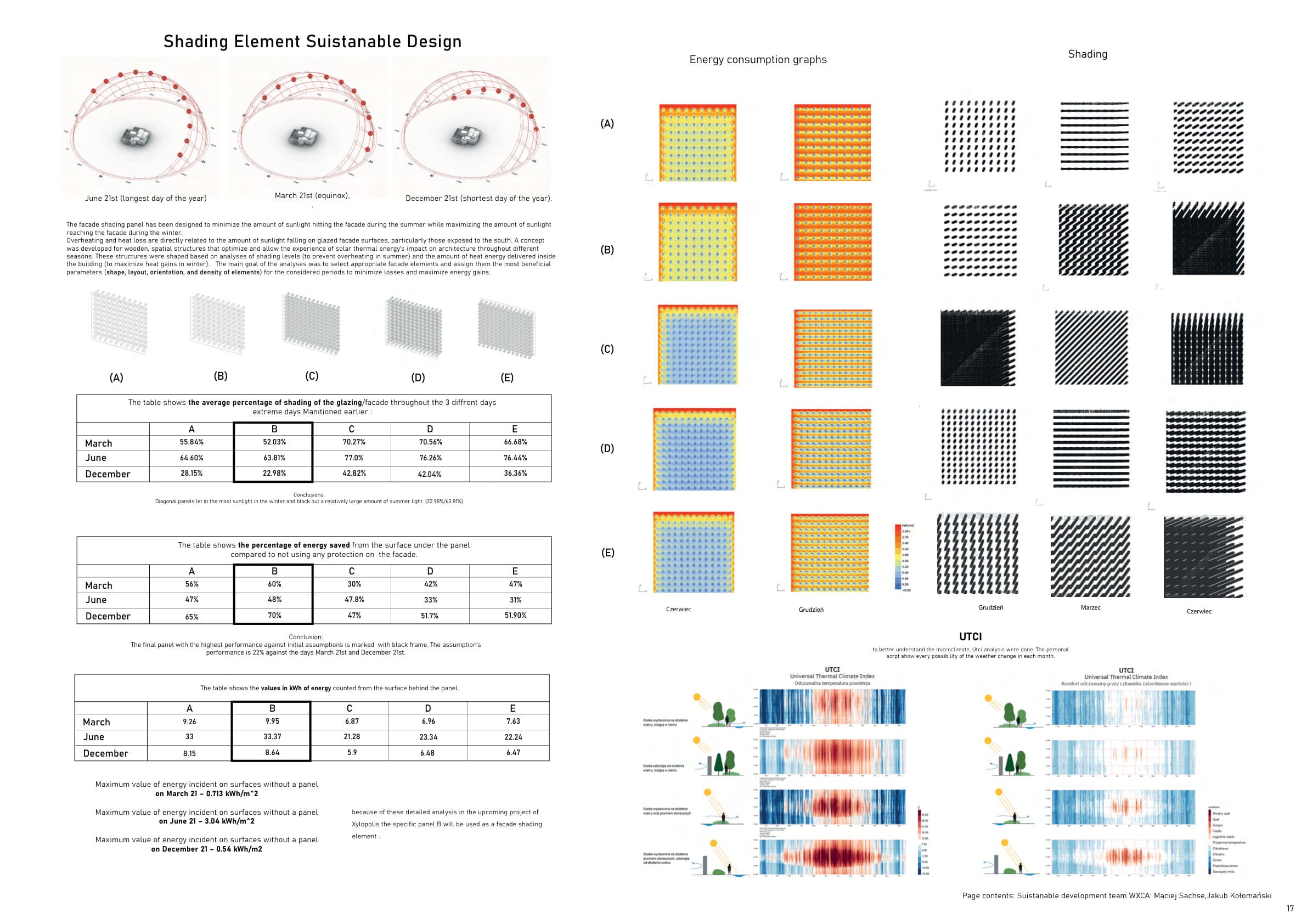
Five wooden shading geometries (A to E) were tested against June 21 (longest day), March 21 (equinox) and December 21 (shortest day). Panel B, the diagonal variant, let in the most winter sun (December shading 22.98%) while blocking summer sun (June shading 63.81%). March sat at 52.03% shading. Against the 22% target drawn from the March and December extremes, panel B hit the goal and was selected for the façade.
Shading · energy performance
Against an unprotected façade, panel B saved 60% of solar energy in March, 70% in June, and 48% in December, the strongest overall balance of the five options. Maximum incident energy without a panel was 0.713 kWh/m² (March 21), 3.04 kWh/m² (June 21) and 0.54 kWh/m² (December 21). The panel therefore prevents summer overheating while preserving winter heat gains on south-facing glazing.
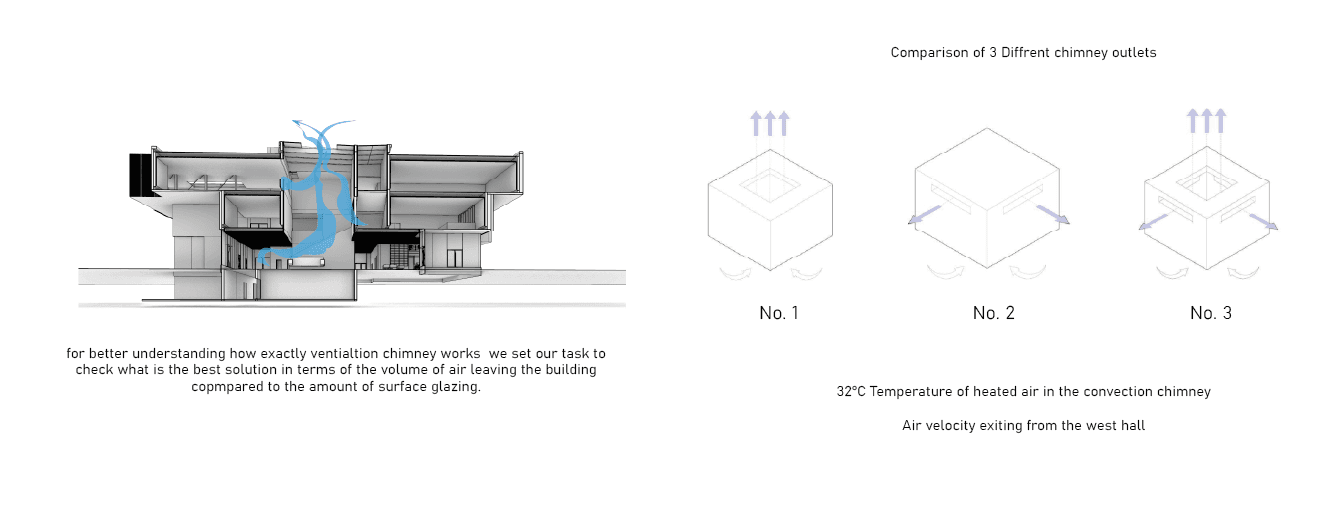
Convection-chimney ventilation study
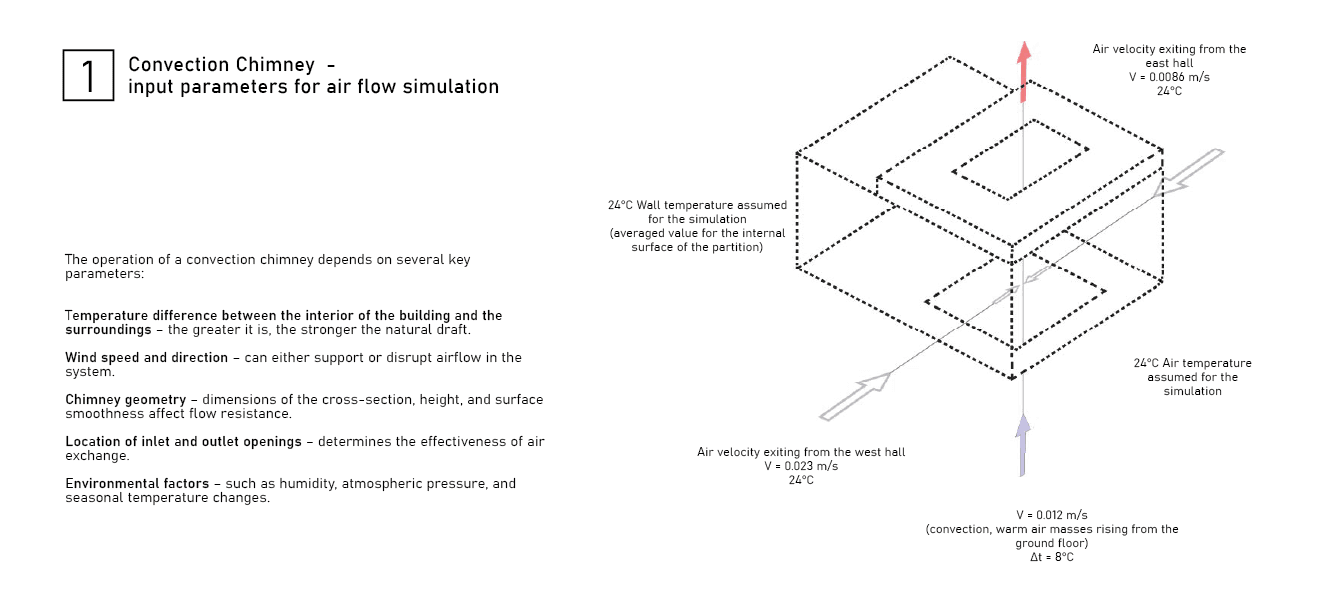
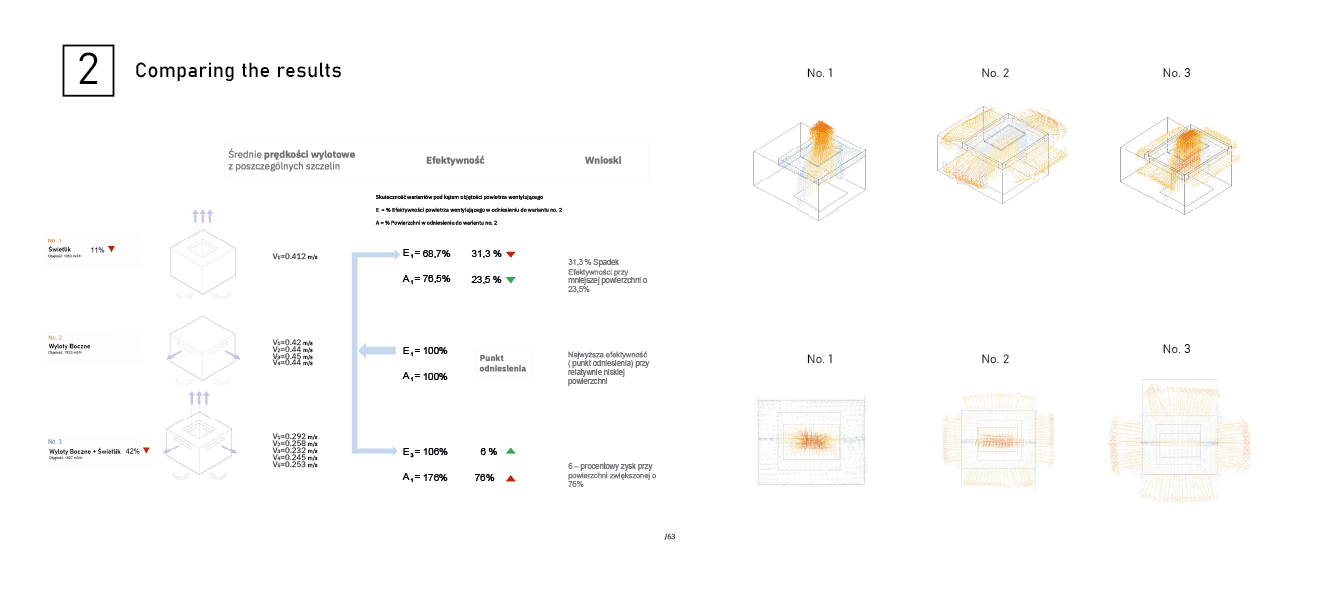
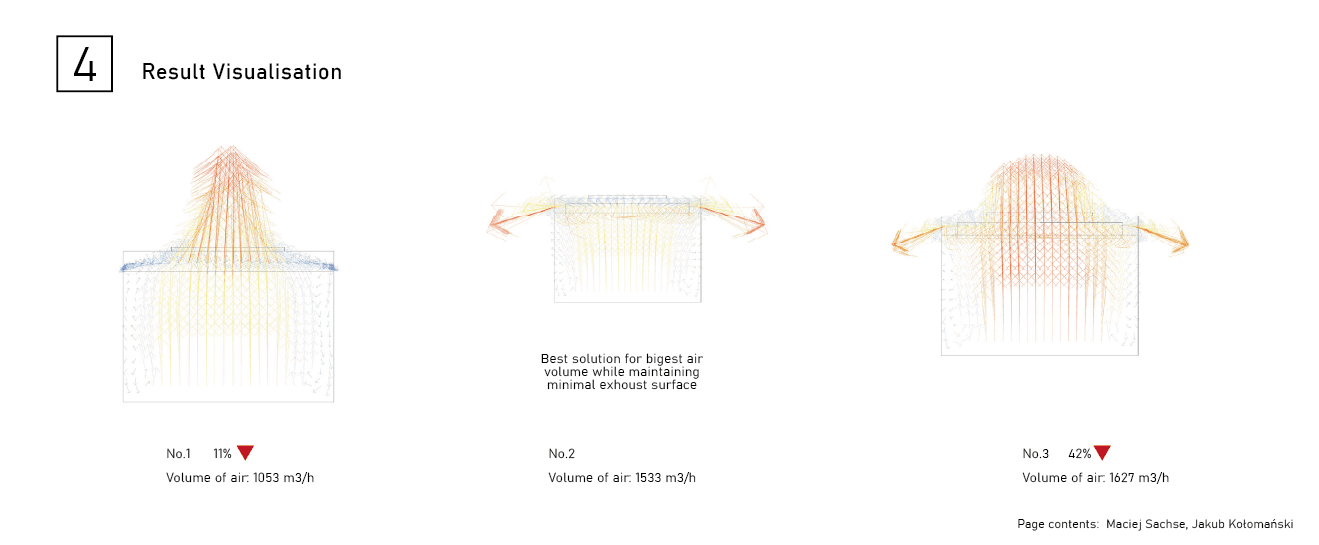
Three chimney outlet geometries were compared via airflow simulation at a 32 °C interior / 24 °C exterior delta. The goal was the largest volume of ventilated air for the smallest opening surface. Variant 1: 1053 m³/h (+11% vs. baseline). Variant 2, side outlets: 1533 m³/h. Variant 3: 1627 m³/h (+42%). Variant 2 was selected.
Tangent comparison · why variant 2 wins
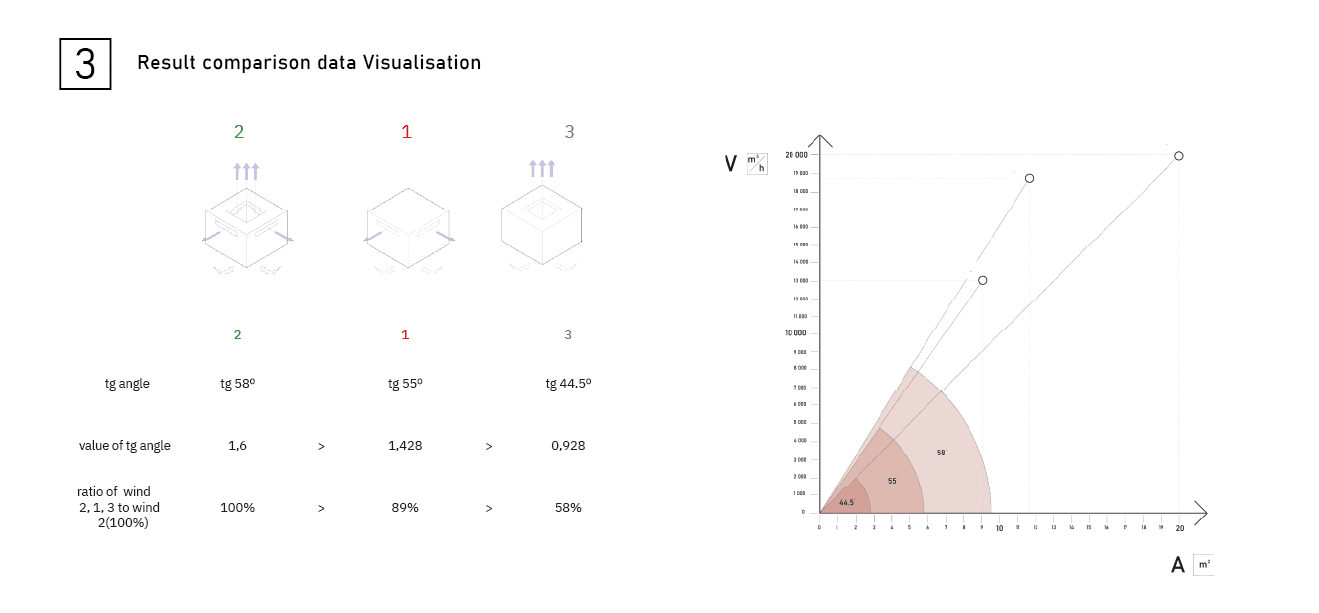
Plotting ventilated volume against opening surface, the optimal solution is the point with the steepest angle (below 90°) from axis A, so efficiency can be ranked directly by the tangent. tg(58°) for variant 2 beat tg(55°) for variant 1 and tg(44.5°) for variant 3, with a ratio of 100% : 89% : 58%. Variant 3 moved the most air, and lost anyway: it needed too much opening to do it.
Envelope detailing · W1 to W4
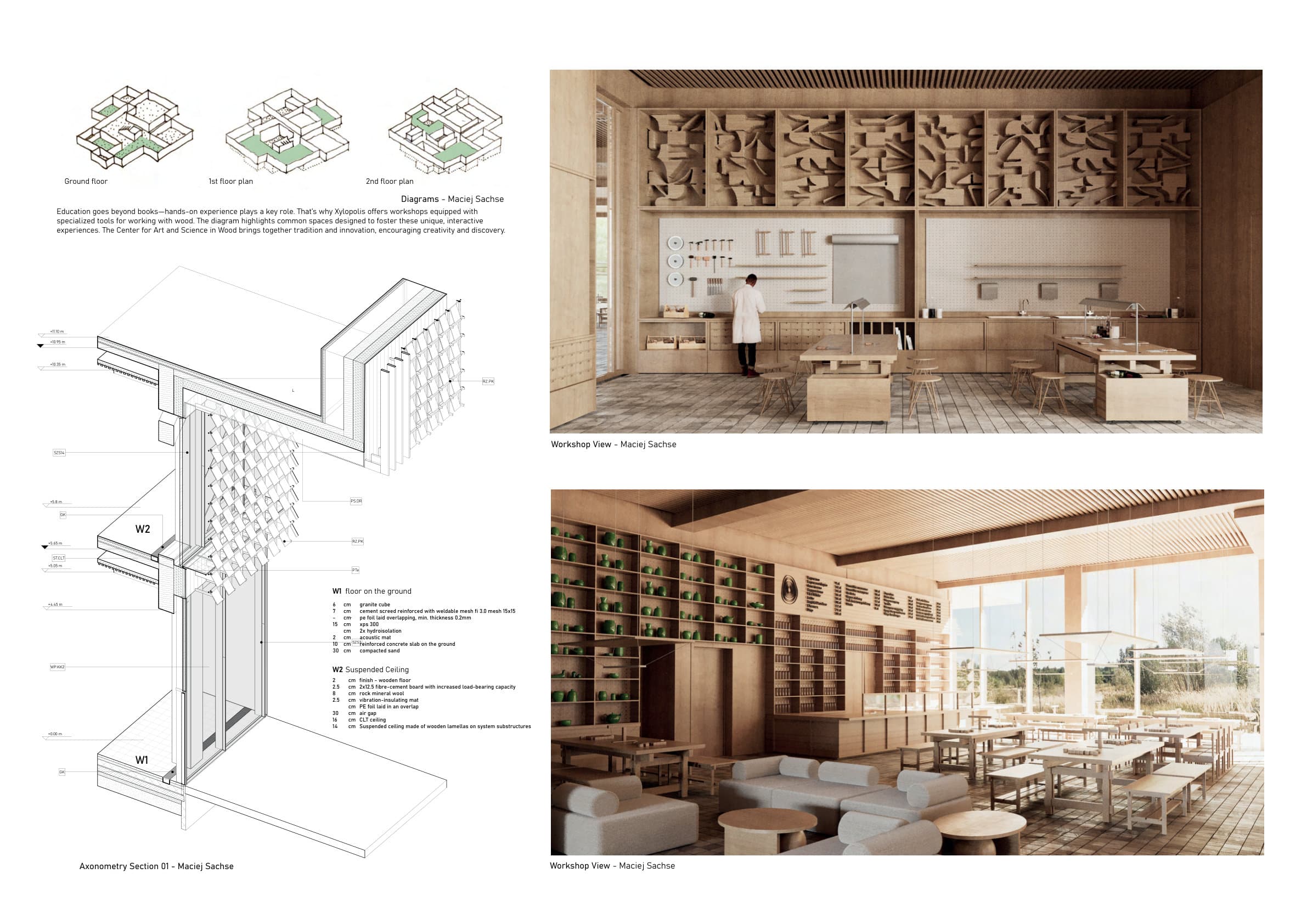
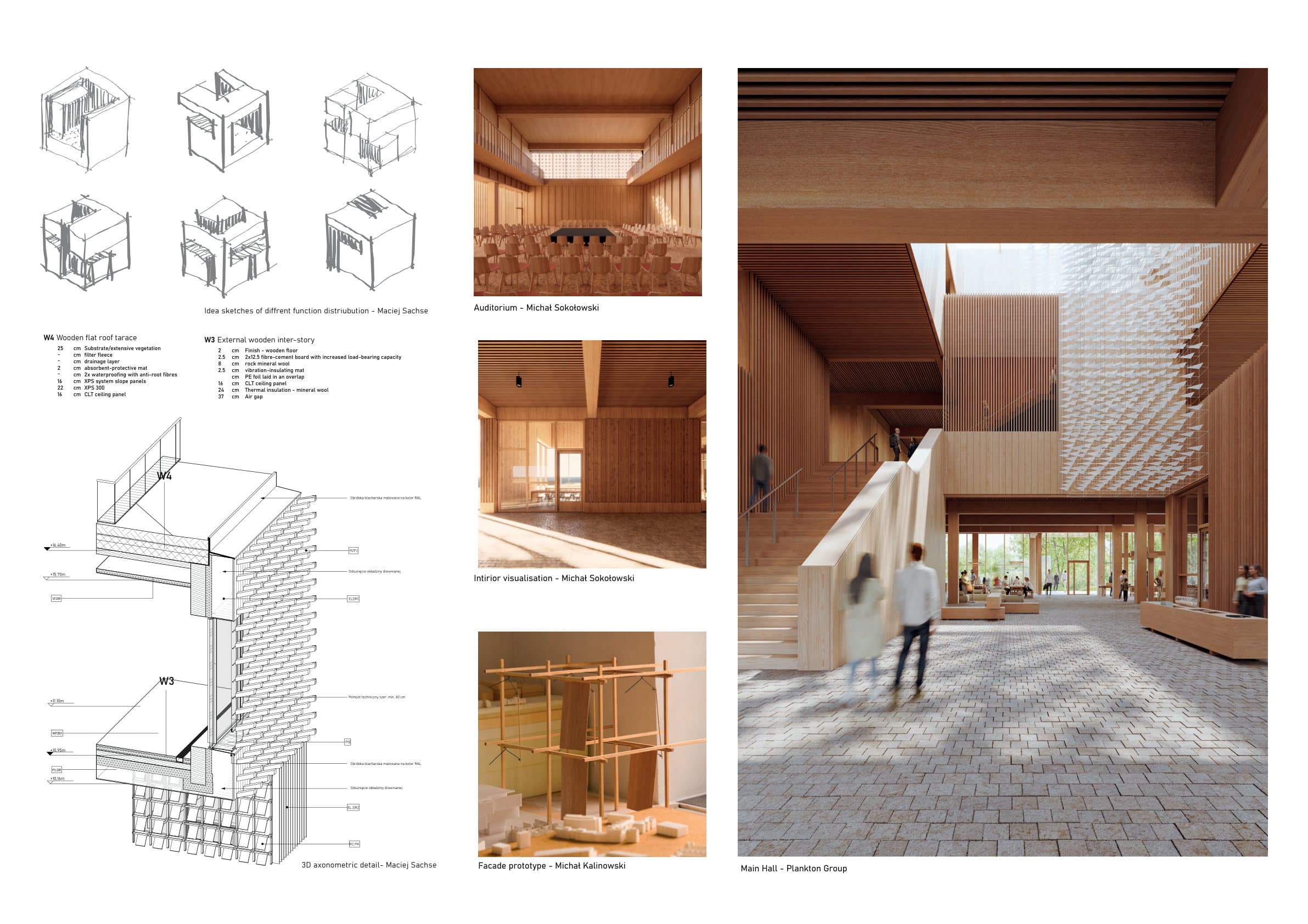
W1 (ground floor): 6 cm granite cube over 7 cm reinforced cement screed, PE foil, 15 cm XPS 300, 2× hydroisolation, 2 cm acoustic mat, 10 cm RC slab, 30 cm compacted sand. W2 (suspended ceiling): 2 cm wooden finish, 2× 12.5 mm fibre-cement board, 8 cm rock mineral wool, 2.5 cm vibration mat, 30 cm air gap, 16 cm CLT, 14 cm wooden-lamella suspended ceiling. W3 and W4 (wooden flat-roof terrace): vegetation substrate, filter fleece, drainage, XPS slope panels up to 22 cm, CLT and mineral-wool layers.